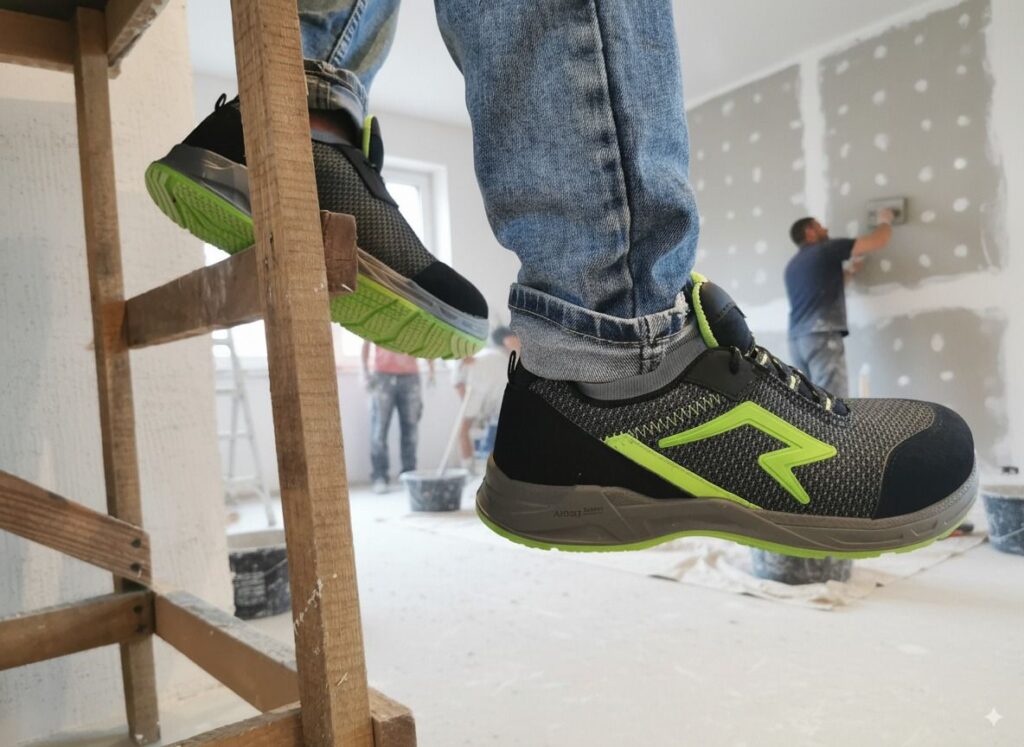
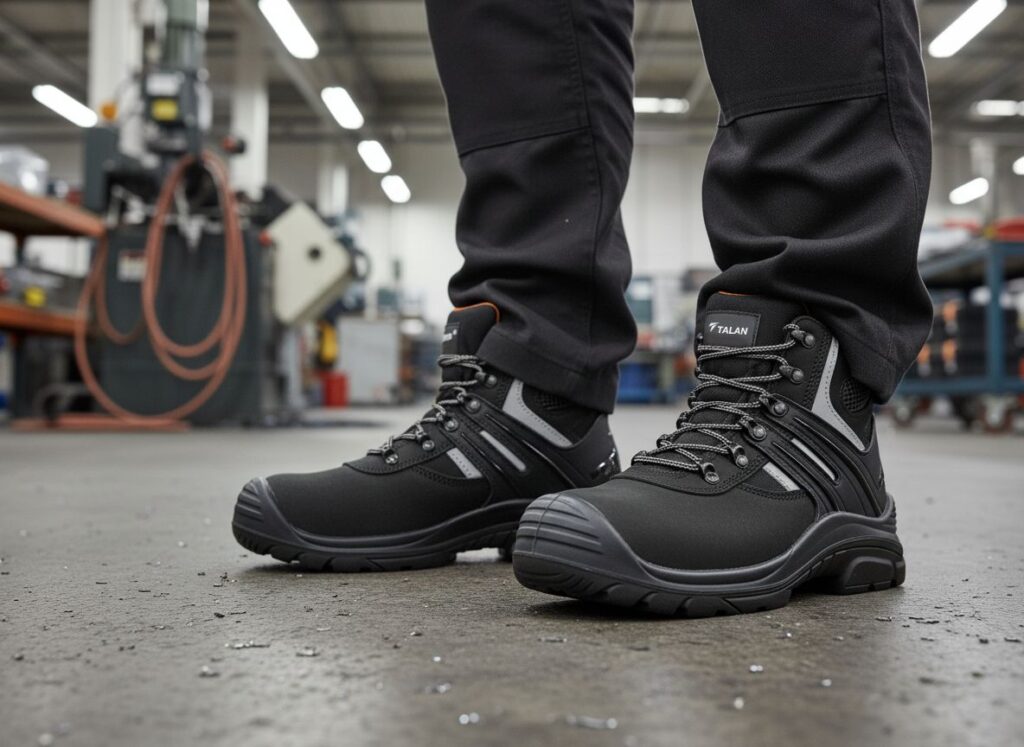
I’m sure you’ve worked on your feet all day in the UAE climate more than once, so you know how your feet feel by the evening. It’s not fatigue, it’s a feeling as if every bone is vibrating from the strain, and all the heat of the day is trapped inside your shoes. This is where it becomes clear that comfort depends not only on the ventilation of the shoes, but also on what is under your feet.
What Does Proper Depreciation Lead to?
The ideal insole absorbs shock, returns energy with every step you take, wicks away moisture, and supports the arch of your foot throughout your entire shift. This is especially important in hot and humid conditions, where overheating of the feet can lead to swelling, chafing, and a sharp drop in endurance. With a poor insole, after a couple of hours you feel that being in your shoes is unbearable. A good one, on the contrary, seems to help you keep going.
Cushioning in the insole is like shock absorbers in a car. It takes the strain off your joints, spine, and leg muscles. Every time your foot hits the ground, it’s softer, which is especially noticeable when you’re walking for a long time on hard surfaces like warehouses, asphalt, and concrete slabs. In high-quality safety shoes, the insole is the main feature of the entire design.
What a good insole provides:
Reduced fatigue in the ankles and knees.
Less back pain at the end of the shift.
Improved stability and control of movements.
No burning sensation in the feet.
Moisture removal deserves special mention. In the UAE, air humidity can change dramatically, especially when moving from indoors to outdoors. If the insole cannot cope with sweat, a feeling of heaviness and slippage inside the shoe appears, and as a result, calluses or fungus appear. Therefore, modern technologies for absorbing and evaporating moisture are no less critical than the shape of the insole itself.
What are Good Insoles Made Of?
High-quality models are made from multi-layer composites. Inside, there is gel, EVA foam, thermoregulators, and mesh textures. Ventilation channels along the entire length of the insole promote air circulation, and a special anatomical shape stabilizes the foot.
Some manufacturers go even further. They add antibacterial impregnation to the insole, inserts to relieve pressure on the heel and toe, and reinforce pressure areas. This is precisely the kind of subtle engineering that is invisible but can be felt from the very first hour of wear.
Who is particularly important?
For those who spend 8+ hours on their feet.
Construction, logistics, service station, and workshop employees.
For those who wear safety shoes every day.
To everyone who has experienced leg pain after changing shifts.
The right insole is your productivity, endurance, and long-term health protection. And it should be replaced at least once every six months, even in the most reliable shoes.
Real-life Examples: When an Insole Changes Everything
Rashid works as a forklift driver in Jebel Ali. His shift is 11 hours a day, often without proper rest. “I used to think that heel pain was just a sign of aging. But when I got shoes with good insoles, it became clear that it was due to poor shock absorption. Now I get half as tired.”
Here is an example from Ajman. A logistics company conducted an internal comparison between standard and improved footwear. The result was a 23% reduction in complaints of foot fatigue among employees who wore models with specialized insoles. This is a noticeable difference, not in theory, but in practice.
What Else to Consider When Choosing
To ensure that the insole works effectively, pay attention to the following details:
Removable design — so it can be replaced or washed.
Support for the longitudinal arch of the foot.
Cushioning inserts in the heel and toe areas.
Compatible with all types of safety shoes.
If you work in hot conditions, look for models with a cooling effect — modern materials can keep the temperature several degrees lower than inside the shoe.
Start Small, Win Big
We often think that comfort is a luxury. But in fact, it is the foundation for efficiency. When your feet don’t hurt, you move faster, concentrate better, and make fewer mistakes. That’s why insoles, although inconspicuous, are a very important part of any shoe.
TALAN is one of those manufacturers who understands this in practice. They don’t make shoes to standard specifications, but design every detail, including insoles, based on real-world conditions. That’s why people in the Emirates choose TALAN not for its big name, but for how their feet feel at the end of their shift. And if you want 12 hours to fly by, start with what’s inside your shoes.